Deep technical assessment of your identity infrastructure using BloodHound, manual analysis and adversary tradecraft — identifying the privilege escalation paths that lead to domain compromise.
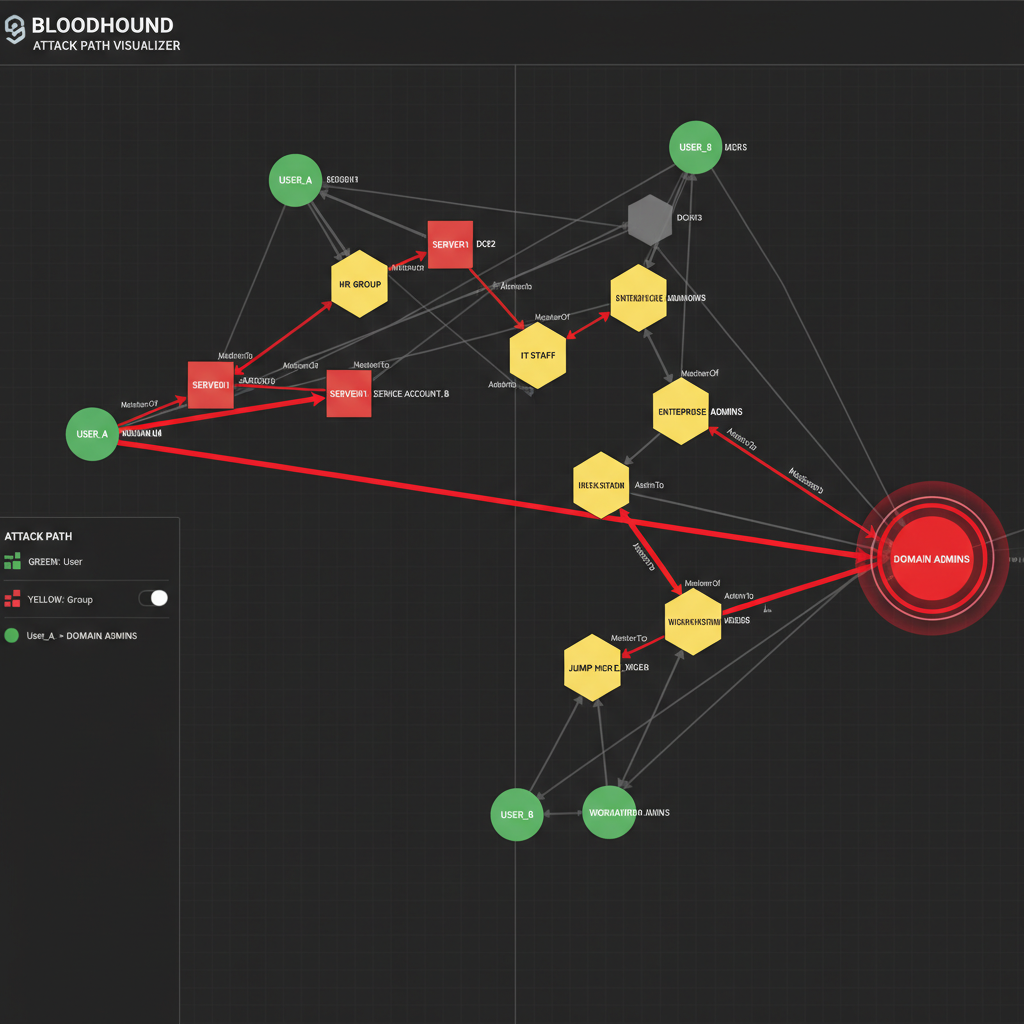
Active Directory remains the backbone of enterprise authentication — and the primary target for threat actors seeking domain dominance. A single misconfigured delegation, an over-privileged service account or a stale nested group membership can create an unbroken attack path from standard user to Domain Admin.
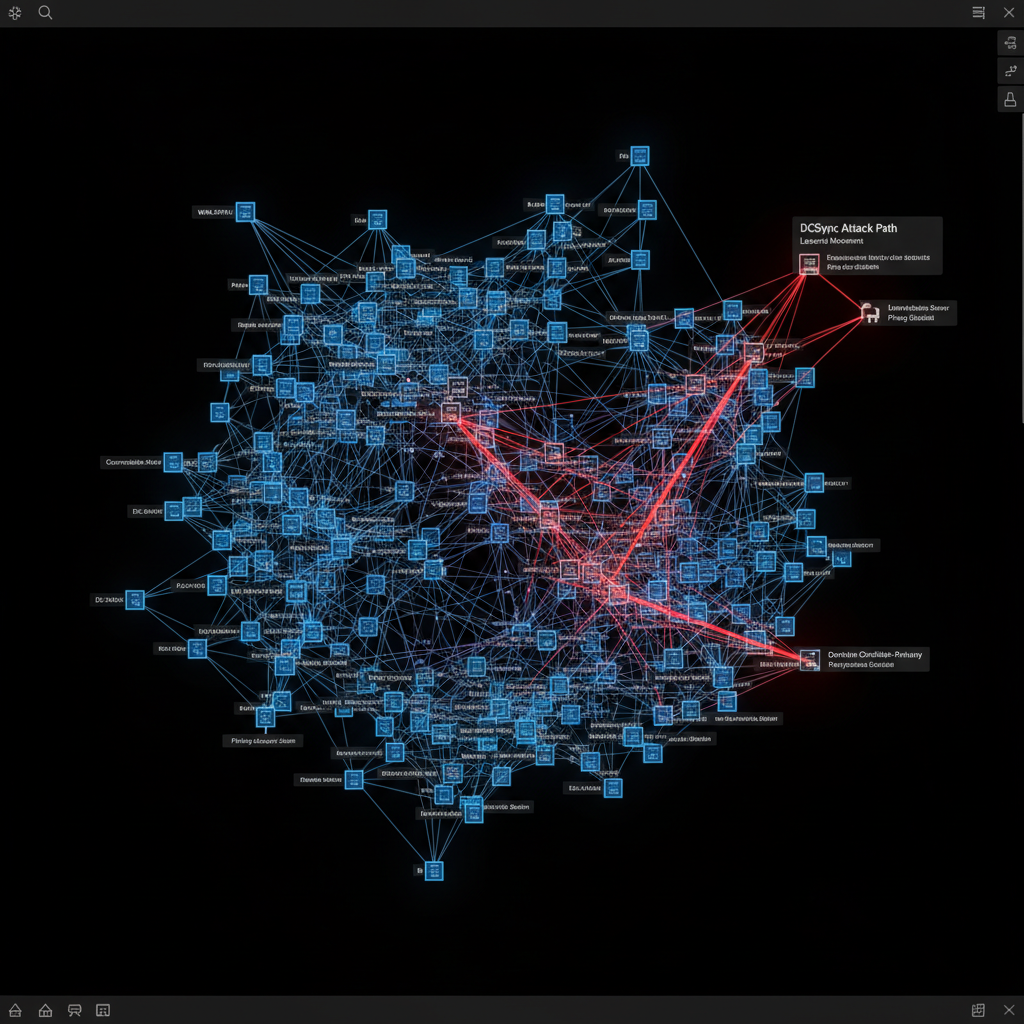
We use BloodHound — the industry-standard graph-based attack path mapping tool — combined with manual exploitation techniques to enumerate every relationship in your directory and surface the paths that matter. Our assessments go beyond automated scans to validate real-world exploitability.
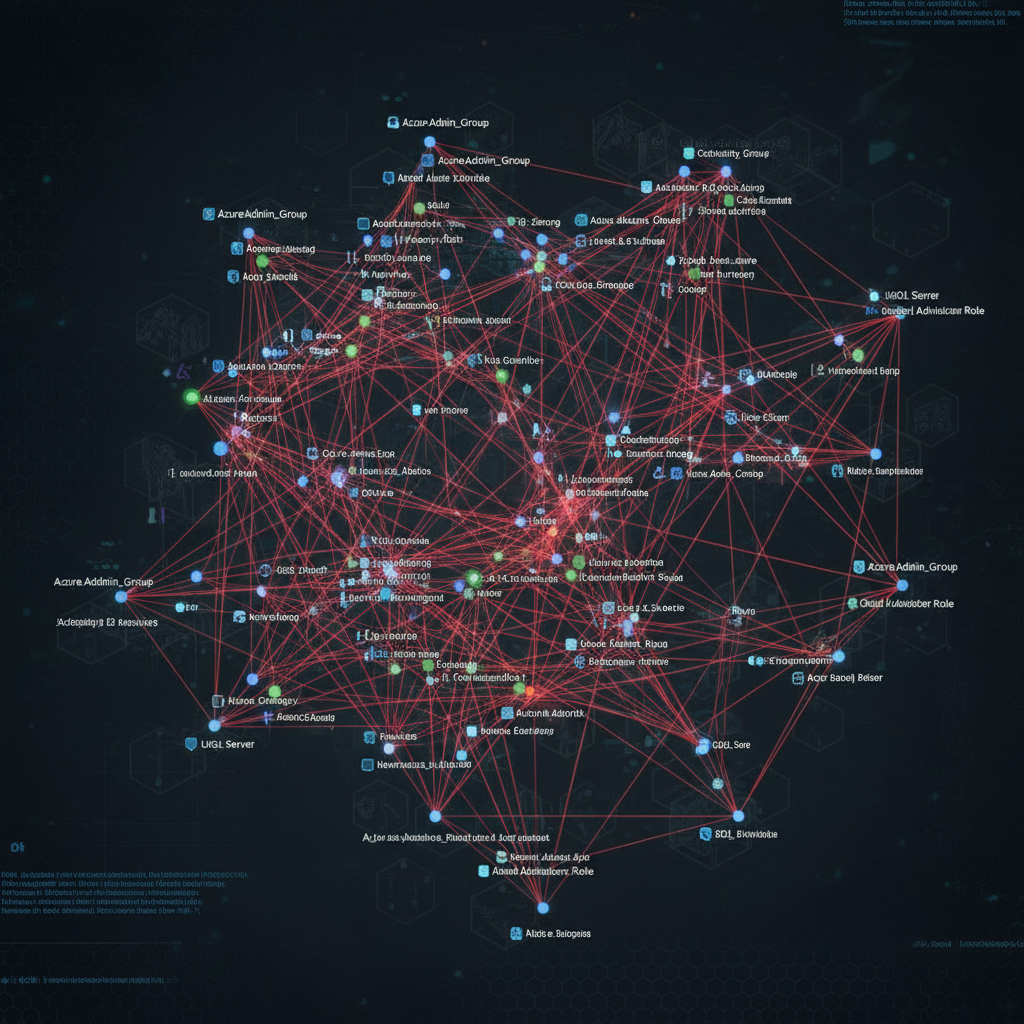
BloodHound ingests Active Directory and Entra ID data to build a graph of every user, group, computer, GPO and trust relationship. Our analysts then query this graph to identify the shortest and most dangerous paths to your highest-value targets.
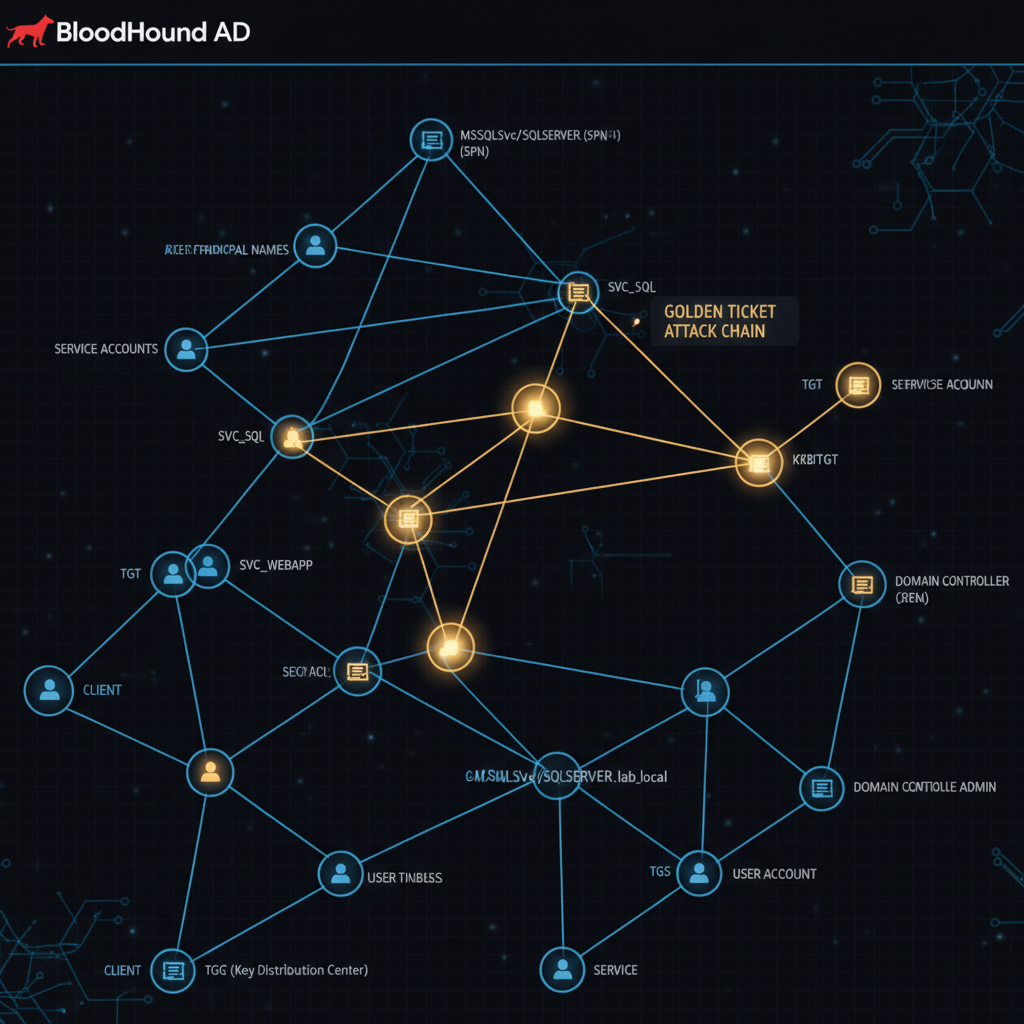
Identifying and remediating AS-REP Roastable accounts, Kerberoastable SPNs, unconstrained delegation and golden/silver ticket attack surfaces across your domain.
Designing and validating AD administrative tier models (Tier 0/1/2) to prevent credential theft cascading from workstations to domain controllers. Includes PAW guidance and LAPS deployment review.
Reviewing Entra ID (Azure AD) Conditional Access policies, PIM role assignments, app registrations, consent grants and hybrid join trust boundaries for misconfigurations that bypass MFA or grant excessive privilege.
Across hundreds of AD assessments, we consistently find the same critical misconfigurations that enable domain compromise. These are not theoretical risks — they are the exact paths ransomware groups and APT actors exploit in the wild: